ServicesFoam Roofing
Foam Roofing in El Mirage
We spray new foam roofs and recoat worn ones on flat and low-slope homes. A foam roof stays healthy when its coating gets renewed on time. We help you see where yours stands and plan the next coat before it turns into a bigger job.
What a Foam Roof Is and When It Makes Sense
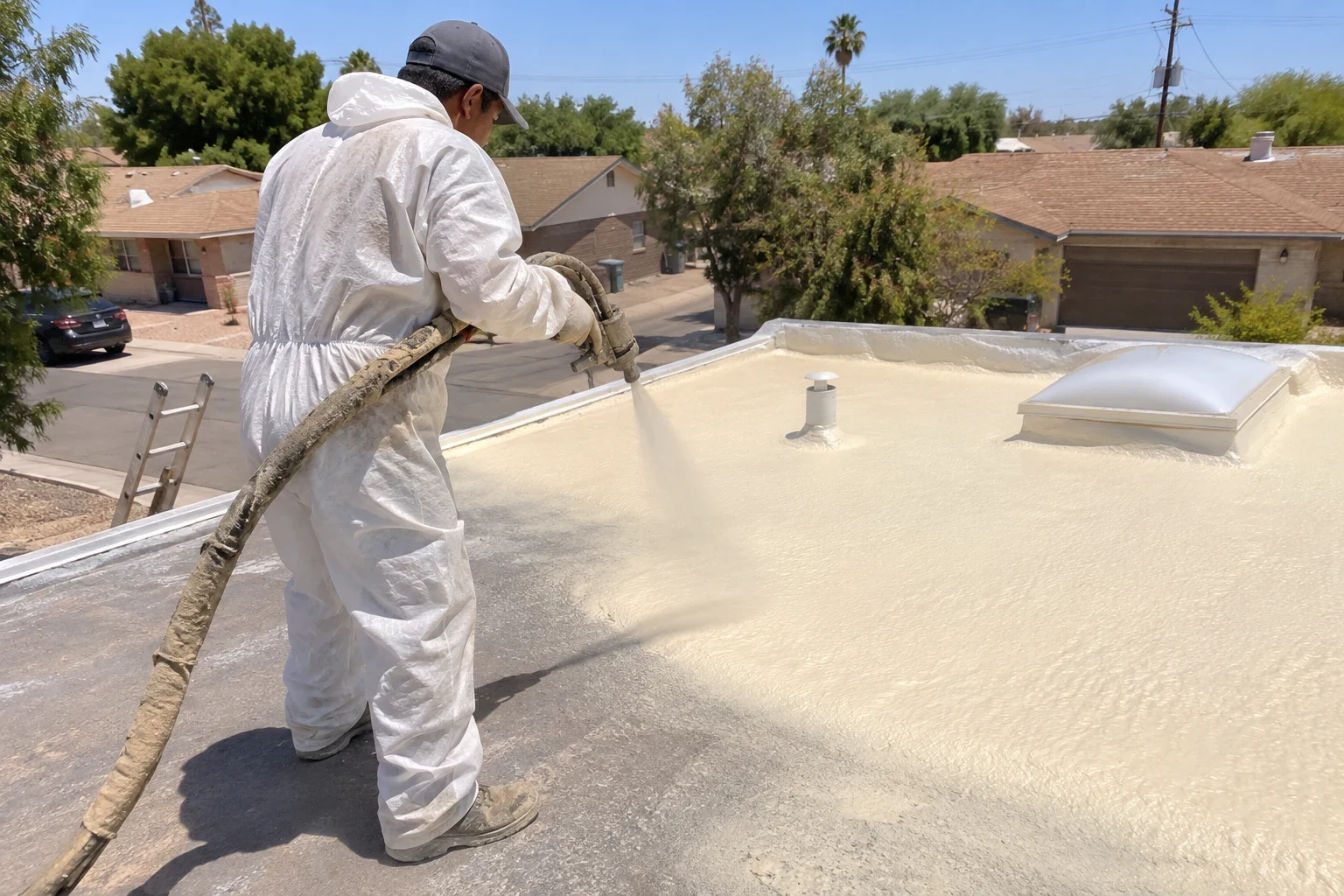
A foam roof is sprayed polyurethane foam. It goes on as a liquid, rises into a solid layer and bonds to the deck below. There are no seams to split. We can build it thicker in low spots so water runs to the drains instead of sitting.
The foam does the insulating and waterproofing. The coating on top protects the foam from the sun. Bare foam breaks down under UV and turns brown and crumbly. So the coating is the part you maintain, and recoating it every so often is far cheaper than replacing foam.
Foam is a good fit for flat roofs and low-slope sections over patios and additions. If your home has a pitched roof, our tile roofing or shingle roofing pages are the better place to start.
What Our Foam Roofing Work Covers
- New spray foam roofs
- We spray foam over a clean, dry deck or a sound existing roof. We build slope toward the drains and scuppers as we go, then coat it the same week.
- Recoating
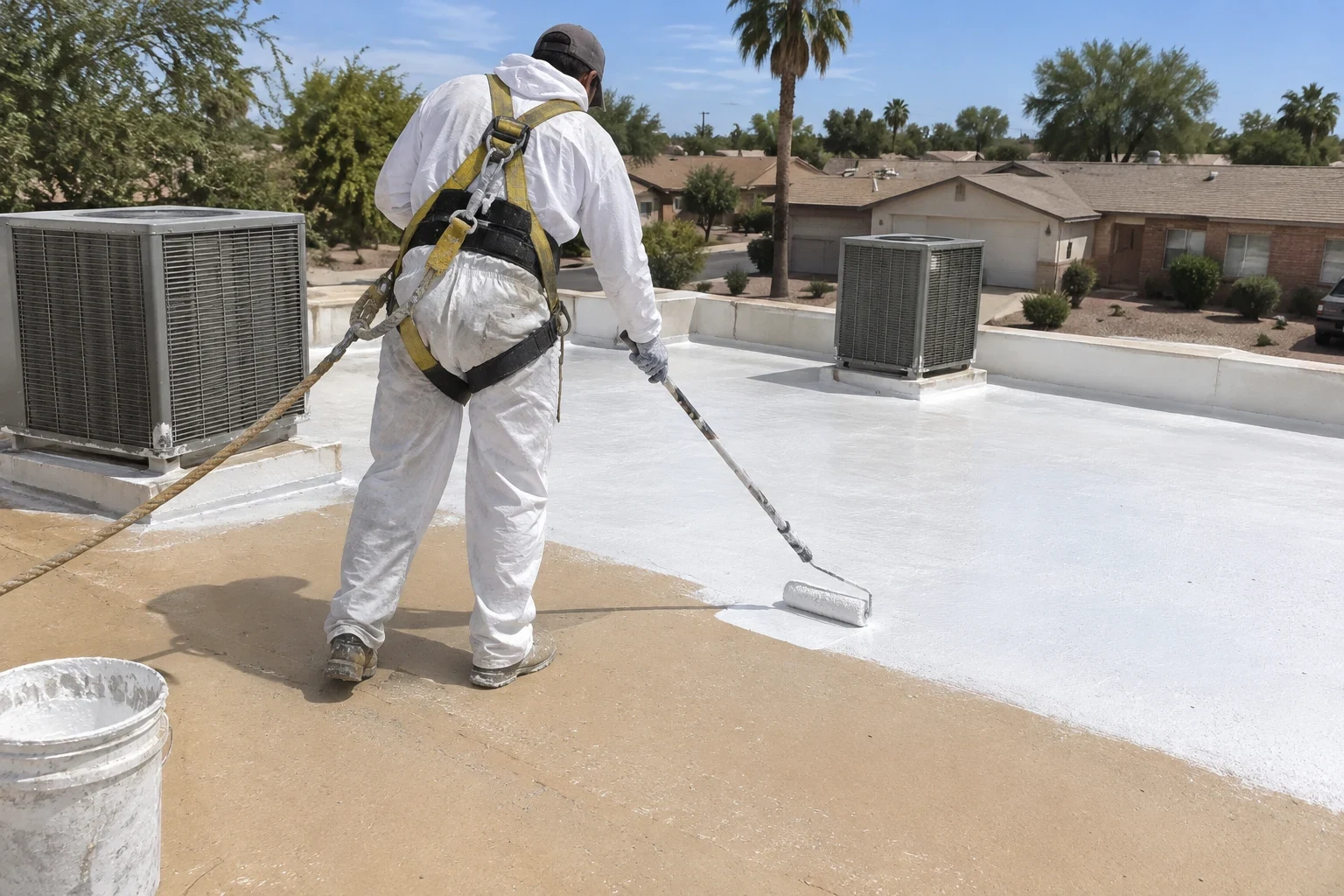
- We clean the roof, fix any damaged spots and apply fresh elastomeric coating in two passes. This is the work that keeps a foam roof going for years.
- Spot repairs
- Bird pecks, blisters, cracks and damage around AC stands get cut out, filled with foam and sealed. Small fixes like these are best done before a recoat.
- Penetrations and edges
- Vents, pipes, AC curbs and parapet walls are where foam roofs usually leak first. We seal them with foam and coating built up thicker than the open field.
- Protecting your property
- Foam overspray can drift. We cover windows, walls and anything parked nearby, and we stop spraying when the wind picks up.
Signs Your Foam Roof Needs Attention
Chalky or thin coating
Rub the surface. If a lot of white powder comes off on your hand, the coating is wearing down. That is the right time to plan a recoat.
Tan or brown foam showing
Exposed foam means the coating is gone in that spot. The sun will start eating into the foam, so this one should not wait long.
Blisters or soft spots
Bubbles or areas that feel spongy underfoot can mean moisture got under the coating or into the foam. These need cutting open to see how far it goes.
Water sitting after rain
Ponding that stays a day or two wears coating faster. Low spots can often be built up with foam during a recoat.
Small holes from birds
Birds peck at foam. Each hole is a path for water and needs to be sealed.
Cracks around the AC unit
Foot traffic and vibration around equipment crack the coating. It is a common first leak spot.
What Moves the Price of Foam Roofing
Foam roof pricing comes down to square footage and how much work the surface needs first. A roof caught while the coating is just thin costs much less than one where water has soaked into the foam. We put each part of the job on a written estimate so you can budget for it.
Recoat or new foam
A recoat is coating only. New foam means spraying the full layer and then coating it, which is a larger job.
Condition of the existing foam
Wet or crumbling foam has to be removed and replaced before anything goes on top. The more of it there is, the higher the cost.
Coating type and thickness
Acrylic and silicone coatings cost different amounts and wear differently. Thicker coats cost more up front and last longer between recoats.
Equipment and edges
Each AC unit, vent and parapet wall takes extra detail work. A roof crowded with equipment takes more time than an open one.
Slope and drainage fixes
Building up low spots to stop ponding adds foam and labor. It is often worth doing during a recoat.
How a Foam Roof Job Runs
- 1
We look and talk it through
We walk the roof, check the coating, probe any soft areas and take photos. Then we tell you plainly if a recoat will do or if some foam has to come off. If there is no rush, we say so and help you pick a time.
- 2
Prep and cleaning
We pressure wash the roof and let it dry fully. Foam and coating will not bond to dust or a damp surface. Damaged areas get cut out and refilled.
- 3
Foam and coating
On a new roof we spray foam to the planned thickness and slope. Then the coating goes on in two coats, often in two colors so we can see full coverage. Granules can be added in walk paths.
- 4
Cleanup and walkthrough
We remove coverings, pick up debris and show you the finished roof. We also tell you roughly when the next recoat should go on your calendar.
Foam Roofing Questions
How often does a foam roof need a recoat?
It depends on the coating and how thick it was applied. Many roofs need one somewhere around every 5 to 10 years. The coating tells you more than the calendar does, so we check how much is left and give you a rough date to plan around.
Can you spray foam over my old flat roof?
Often, yes. If the existing roof is dry and firmly attached, foam can go right over it, which avoids a tear-off. If we find wet layers underneath, those have to come out first, and we show you photos of what we found.
Will the overspray get on my car or my neighbor's house?
Foam can drift in wind, so we take it seriously. We cover what is close, ask that cars be moved and stop spraying if the wind comes up. Coating work drifts much less than foam does.
When is the best time to schedule foam work?
Foam and coating need a dry roof and steady weather. Spring and fall are easiest, and we try to get roofs done before monsoon season. Calling early gives you the best pick of dates.
My foam roof has a small leak. Do I need a whole new roof?
Usually not. Most leaks on foam roofs are local, like a bird hole or a crack at the AC curb. We repair the spot and tell you honestly if the rest of the coating is close to needing a recoat. For leaks on other roof types, see our roof repair page.
Get Your Foam Roof on a Plan
Tell us how old the coating is and what you are seeing up there. We will talk through the options and set a time that works before the job turns urgent.