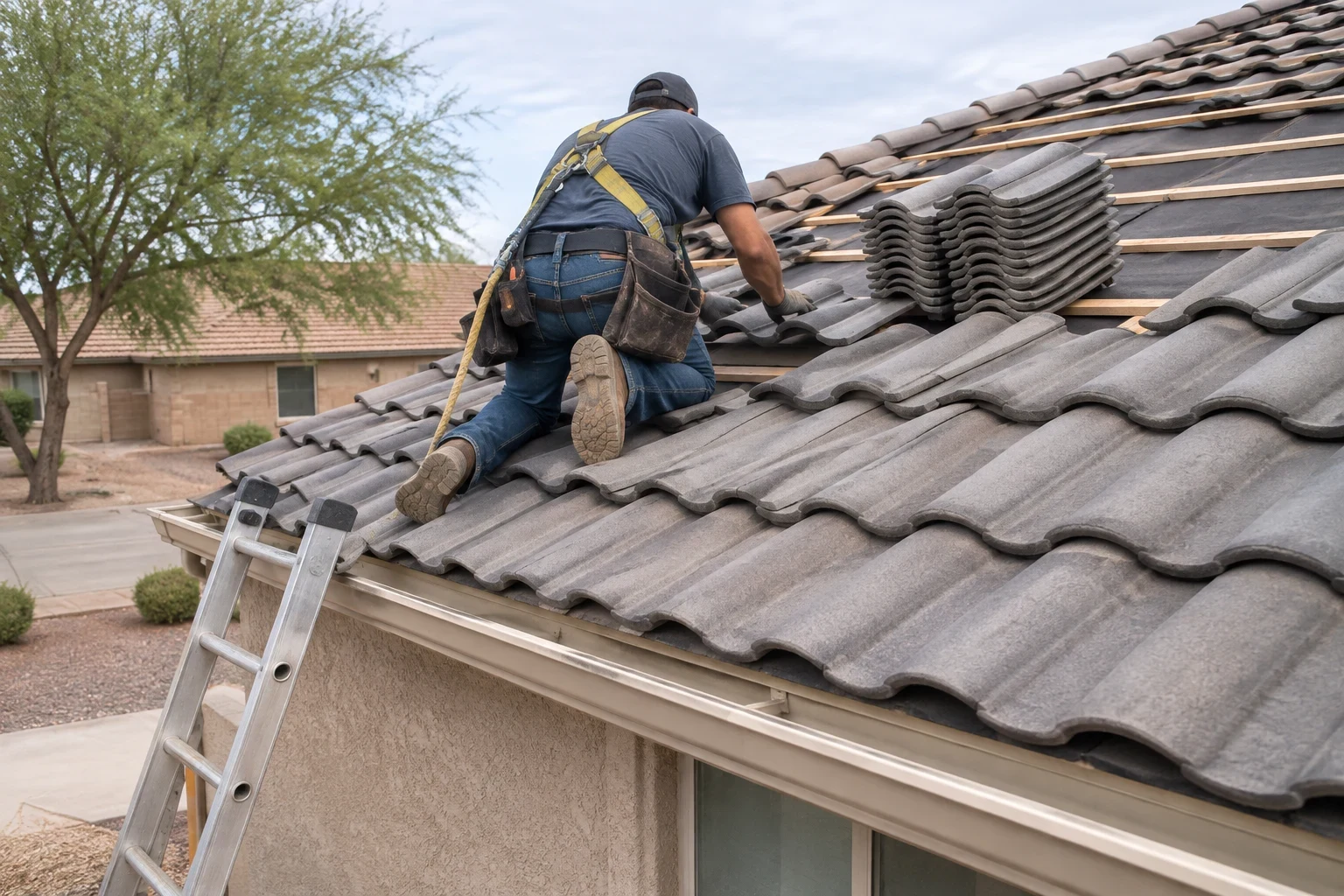
ServicesTile Roofing
Tile Roofing in El Mirage
Tile can outlast your mortgage. The layer under it usually can't. We repair broken tile, replace worn underlayment and install new tile roofs. We also help you see the big job coming years ahead, so you can budget for it instead of scrambling.
What a tile roof really needs
Most tile roofs around El Mirage are concrete, either flat profile or S-shaped. That tile takes the beating from the sun and turns away the bulk of the rain. The real waterproofing is the sheet underneath, the underlayment. Heat bakes it year after year until it turns brittle, cracks and tears, often long before the tile shows any wear.
So a lot of tile work isn't about the tile. A common fix is a lift and relay. We take the tile off, put down new underlayment and battens where needed, then set your same tile back. Your home keeps its look and gets a new waterproof layer.
We'd rather you hear about that job five years early than the week a ceiling stain shows up. Once you know the age and condition of what's under your tile, you can set money aside and pick a time that works for you.
What our tile roofing work covers
Broken and slipped tile
Tiles crack when someone steps in the wrong spot or a branch comes down. We swap out broken pieces and reset slipped ones. If you have spare tile in the garage, we'll use it for the best match.
Underlayment replacement
This is the lift and relay. We remove the tile and stack it, tear off the old felt, lay new underlayment and battens, then reinstall the tile. Any cracked pieces get replaced along the way.
Flashing and valleys
Many tile leaks start where the roof meets a wall, a chimney or a valley. We replace rusted or bent flashing and clear valleys so water runs off instead of backing up under the tile.
Ridge and hip caps
Ridge caps are held with mortar or fasteners, and old mortar cracks. We re-bed or re-secure loose caps so they stay put when the wind picks up.
New tile roofs
For a full change-over or a new build, we install tile from the deck to the ridge. Our Roof Replacement and New Roof Installation pages explain how those bigger jobs run.
Signs your tile roof needs attention
The roof is 20 years old or more
Underlayment under tile commonly starts to wear out somewhere around 20 to 25 years in this heat. If your roof has never been relaid, now is the time to start planning.
Brittle paper at the edges
Look at the eaves. If black felt is showing and it looks dry, curled or torn, that is your waterproof layer giving out.
Cracked or shifted tiles
You can often spot these from the ground or a ladder. A gap in the tile lets sun and water hit the underlayment directly, which speeds up wear in that spot.
Stains after a rain
A brown ring on the ceiling or water in the attic after a summer rain means water got past the tile and the layer below it.
Loose ridge caps
Caps that rock, slide or have mortar crumbling out should be reset before they fall and break more tile.
How a tile job goes
- 1
Your call and our visit
Tell us what you're seeing and roughly how old the roof is. We set a time, walk the roof carefully and take photos of what we find.
- 2
A written estimate with a plan
You get a line-item estimate. If the roof can wait, we tell you so and give you a rough idea of when to plan for the bigger job. If it can't wait, we show you why.
- 3
Permit and scheduling
For underlayment replacement or a new roof, we pull the permit. We pick a date with you, and when you have the choice, we steer away from the hottest weeks and monsoon season.
- 4
The work
We stack tile on the roof as it comes off, lay new underlayment and battens, replace flashing and reset the tile. Open sections get covered before we leave each day.
- 5
Walkthrough and cleanup
We walk the finished roof with you and share photos of the new layer before the tile went back on. Old felt, nails and broken tile get hauled away.
What drives the cost of tile work
Tile jobs range from a short repair visit to a full relay that takes several days. We break every part out on a written estimate. That way you can see where the money goes and plan for it, instead of guessing.
- Size and steepness
- A bigger roof takes more underlayment, more battens and more hours on site. A steep pitch adds safety gear and slows down every step of the job.
- Underlayment choice
- Standard felt costs less. Heavier synthetic or two-layer systems cost more and tend to hold up longer in heat. We'll show you both and what each means for how long until the next big job.
- Replacement tile
- Some concrete tile breaks during a relay, so we plan for a few spares. Older or discontinued profiles can be harder to find and match.
- What's under the tile
- We can't see the deck and battens until the tile is off. If we find rot, we stop, show you photos and price it before we do the work.
- Permits and timing
- Permit fees are part of bigger jobs. Booking ahead in a calmer season also gives you more choice of dates.
Tile roofing questions
Something not covered here? (623) 632-0966
Do I need new tile or just new underlayment?
Usually just the underlayment. Concrete tile often has plenty of life left when the layer under it is worn out. A lift and relay reuses your good tile, which keeps your home's look and usually costs less than all-new tile.
How long does a lift and relay take?
Most homes take a few days to about a week, depending on size, pitch and weather. We work outside, so you can stay home and go about your day. Open areas are covered before we leave each evening.
Can I walk on my tile roof?
We'd ask you not to. Concrete tile cracks easily under a heel, especially in the middle of the tile. If you need something checked or a vent cleared, give us a call and we'll do it.
Can you match my existing tile?
Often, yes, especially with common concrete profiles. Older or discontinued tile can be harder to match. Spare tile left over from the original build is the best source, so check your garage or side yard before we start.
Should I switch from tile to shingles or foam?
Sometimes it makes sense, and we'll talk it through honestly. Shingles weigh less and cost less up front, while tile lasts longer and suits many homes here. Foam is for flat roof sections, so see our Foam Roofing, Shingle Roofing and Flat Roofing pages for those options.
How can I plan for the cost ahead of time?
Start with the age of your roof and a look at its condition. We'll tell you roughly how many years you have before the underlayment needs replacing and put the likely work on a written estimate. That gives you a number and a timeline to save toward.
Get ahead of your tile roof
Tell us how old your roof is and what you've noticed. We'll come look, put it all on a written estimate and help you sort out what can wait and what can't.